August 11, 2026
Premium Steel Structure Solutions Supported by Precision Manufacturing Capabilities
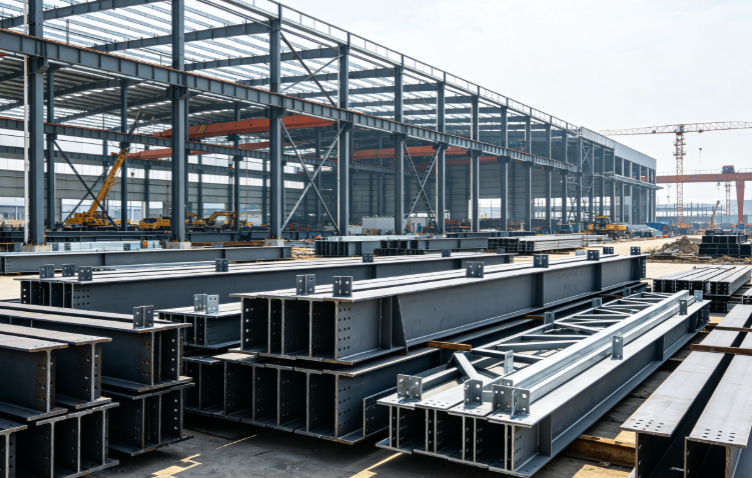
Table of Contents
1. Introduction
2. Core Composition of Premium Steel Structure Solutions
3. How Precision Manufacturing Improves Steel Structure Quality
4. Key Precision Production Procedures for Steel Structure Components
5. Common Construction Problems & Optimized Preventive Measures
6. Data Comparison: Ordinary Fabrication VS Precision Manufacturing Steel Structures
7. Whole-process Quality Control for Precision Steel Fabrication
8. Typical Application Projects of Premium Steel Structures
9. Customized Service for Global Engineering Clients
10. Conclusion
11. Industry FAQ
1. Introduction
Steel structures are widely adopted in industrial workshops, logistics warehouses, public buildings, stadiums and new energy supporting projects. The overall safety, installation efficiency and long-term service life largely depend on component manufacturing accuracy.
Many engineering suppliers focus only on assembly and on-site construction, while ignoring factory precision fabrication. Component size deviation, poor welding consistency and uneven surface treatment will lead to difficult assembly, structural stress concentration and hidden safety risks.
We deliver premium steel structure solutions backed by complete precision manufacturing capabilities. From raw material cutting, CNC machining, automatic welding to surface anti-corrosion treatment, every process follows strict dimensional tolerances. Our solutions adapt to medium and large civil engineering, industrial construction and overseas EPC projects.
This article explains the value of precision manufacturing in steel structure production, sorts out core production processes, compares performance differences, and provides procurement reference for engineering contractors and project owners.
Core Industry Keywords: premium steel structure solutions, precision steel structure manufacturing, steel component fabrication, steel workshop construction, industrial steel frame, structural steel welding, anti-corrosion treatment for steel, prefabricated steel building
2. Core Composition of Premium Steel Structure Solutions
2.1 Main Load-bearing Components
Steel columns, H-beams, box beams, support frames and trusses. These components bear the main vertical and horizontal load of the whole building. Precision dimension control ensures uniform force transmission after installation.
2.2 Secondary Structural Parts
Purlin, wall beam, connecting bracket and bracing system. Standardized precision fabrication guarantees fast bolt assembly without on-site rework.
2.3 Auxiliary Supporting Systems
Roof & wall enclosure materials, anti-corrosion coating system, fire protection coating, foundation connecting accessories. Complete matching forms integrated steel building solutions.
2.4 Engineering Technical Service
Structural drawing deepening, production drawing conversion, pre-assembly inspection, installation guidance and after-sales technical support.
3. How Precision Manufacturing Improves Steel Structure Quality
3.1 Control Dimensional Deviation of Components
Precision cutting and CNC processing minimize length, hole position and section tolerance. It avoids forced correction during field installation.
3.2 Stabilize Welding Quality
Automatic welding equipment reduces manual operation errors. Consistent weld size and penetration prevent fatigue cracks under long-term load.
3.3 Optimize Surface Anti-corrosion Effect
Uniform shot blasting grade and standardized coating thickness extend anti-rust service life in outdoor and humid environments.
3.4 Realize Modular Pre-fabrication
High-precision components support factory pre-assembly. Defects can be eliminated inside the workshop before delivery, greatly shortening on-site construction period.
4. Key Precision Production Procedures for Steel Structure Components
4.1 Raw Material Inspection & Nesting Cutting
Check steel plate section, material grade and flatness. CNC flame cutting and sawing machine ensure neat cutting edge and stable size tolerance.
4.2 CNC Machining & Hole Drilling
Digital drilling lines control hole spacing and hole position accuracy. High-strength bolt holes maintain consistent concentricity for smooth connection.
4.3 Assembly & Automatic Welding
Jig fixture positioning for component assembly. Robot welding and semi-automatic submerged arc welding improve welding uniformity compared with manual welding.
4.4 Straightening & Stress Relief
Mechanical straightening corrects bending deformation after welding. Proper aging treatment reduces internal welding stress.
4.5 Shot Blasting & Protective Coating
Shot blasting removes rust and oxide scale to reach specified roughness. Multi-layer anti-corrosion or fireproof coating is constructed with thickness monitoring.
4.6 Pre-assembly & Finished Product Inspection
Large frame components conduct factory pre-assembly to verify overall matching before packaging and shipment.
5. Common Construction Problems & Optimized Preventive Measures
5.1 Component Dimensional Over-tolerance
Causes: Manual rough cutting, unstable assembly fixture, welding thermal deformation without straightening. Solutions: Adopt full CNC processing; use fixed assembly jigs; arrange straightening process after welding.
5.2 Weld Defects (Porosity, Incomplete Penetration)
Causes: Unstable manual welding parameters, unclean welding groove surface. Solutions: Popularize automatic welding; standardize groove cleaning and preheating specifications.
5.3 Bolt Hole Misalignment During Installation
Causes: Drilling position deviation, component cumulative deformation. Solutions: Unified digital drilling program; strengthen size inspection after component forming.
5.4 Uneven Anti-corrosion Coating & Local Peeling
Causes: Inadequate shot blasting, uncontrolled coating thickness. Solutions: Monitor surface roughness; deploy real-time thickness testing during coating construction.
6. Data Comparison: Ordinary Fabrication VS Precision Manufacturing Steel Structures
The table below collects actual inspection data of steel structure components from engineering projects.
表格
Inspection Item | Ordinary Steel Fabrication | Precision Manufacturing Steel Structure | National Engineering Standard |
Component length tolerance | ±3 ~ ±6 mm | ≤±2 mm | ≤±3 mm |
Bolt hole position deviation | ±1.8 ~ ±2.5 mm | ≤±1.0 mm | ≤±1.5 mm |
Qualified rate of weld inspection | 82.3% | 97.6% | Meet design grade |
Anti-corrosion coating thickness fluctuation | ±25% | ±8% | Within design range |
On-site component rework rate | 11.7% | 2.4% | Minimize on-site modification |
Average installation progress speed | Baseline | 28% faster | Shorten construction cycle |
It can be clearly seen that precision manufacturing effectively reduces on-site rework risks, accelerates installation progress and improves long-term structural safety.
7. Whole-process Quality Control for Precision Steel Fabrication
7.1 Incoming Material QC
Verify steel MTR certificates; sampling test material mechanical performance and chemical composition.
7.2 In-process First Article & Patrol Inspection
First piece confirmation after parameter adjustment; continuous sampling inspection during cutting, drilling and welding.
7.3 Welding Quality Monitoring
Welder qualification management, real-time recording of welding parameters, random UT / MT non-destructive testing for key welds.
7.4 Surface Treatment Inspection
Check shot blasting grade, coating thickness and surface appearance.
7.5 Pre-assembly & Final Delivery Inspection
Large steel frames carry out pre-assembly; all components are labeled with drawing numbers for easy on-site sorting.
8. Typical Application Projects of Premium Steel Structures
· Industrial factory buildings & production workshops
· Logistics distribution warehouses and cold storage buildings
· Large-span public buildings: stadiums, exhibition halls, shopping malls
· New energy projects: photovoltaic support, wind power auxiliary workshops
· High-rise steel frame buildings and office constructions
· Overseas EPC industrial park and infrastructure projects
9. Customized Service for Global Engineering Clients
We support customized steel structure design deepening, component fabrication and overall enclosure system matching according to international building codes.
Technical team can provide production drawings, calculation documents, inspection reports required for overseas project approval. We are capable of undertaking small prototype orders and large-scale bulk engineering orders, and offer standardized export packaging and loading schemes.
10. Conclusion
Premium steel structure projects rely not only on reasonable design, but also stable precision manufacturing capacity in the factory.
Rough fabrication leads to various on-site assembly obstacles and hidden structural risks. High-precision component production minimizes field modification, shortens construction period and prolongs building service life.
As a supplier integrating precision fabrication and overall steel structure solutions, we combine standardized production technology with complete quality control. For contractors and investors pursuing high-quality engineering projects, stable precision manufacturing capacity is a core evaluation index when selecting steel structure partners.
11. Industry FAQ
Q1: What is the biggest advantage of precision-manufactured steel components? A: Strict dimensional control reduces forced correction and cutting modification on site. It speeds up installation and avoids additional stress generated by forced assembly.
Q2: Can precision manufacturing largely increase the overall project cost? A: Factory processing cost rises moderately, but on-site labor and rework expense drop significantly. The comprehensive cost of the whole project is more controllable, and safety risk is lower.
Q3: What testing methods are used to inspect key welds of steel structures? A: Visual inspection (VT), ultrasonic testing (UT) and magnetic particle testing (MT) are commonly adopted for important load-bearing welds according to design requirements.
Q4: Is pre-assembly necessary for all steel structure projects? A: Not mandatory for small simple frames. Large-span, complex connection steel frames are recommended to complete factory pre-assembly to eliminate matching problems before shipment.
Q5: What anti-corrosion systems can be adopted for exported steel structures? A: Common schemes include shot blasting + primer + intermediate paint + topcoat; hot-dip galvanizing is also available for components exposed to harsh marine atmospheric environment.