May 18, 2026
How can the modular design of temporary bridge steel box girders achieve 24-hour rapid deployment?
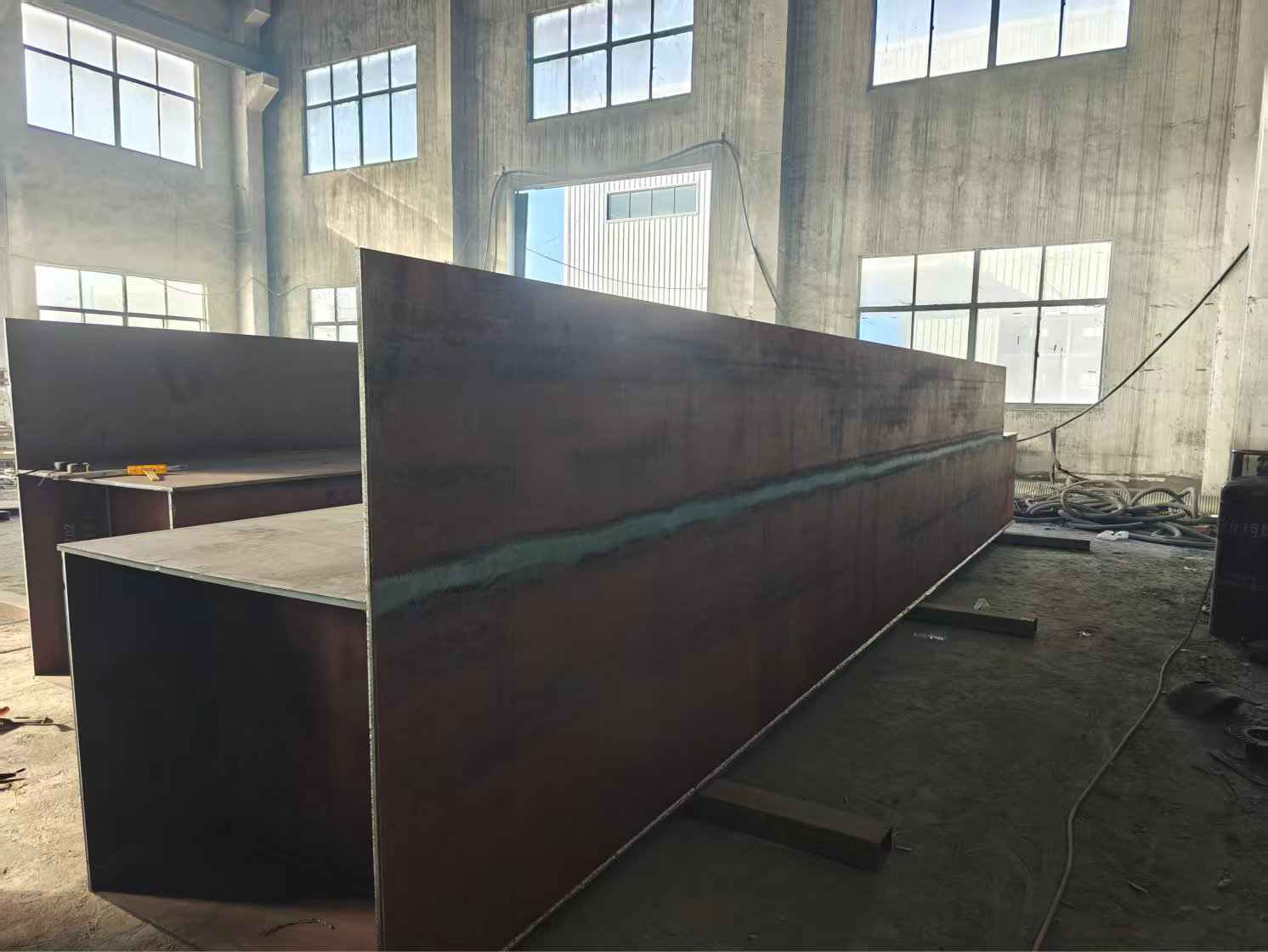
Table of Contents
1. The Core Logic of Modular Design for Temporary Bridge Steel Box Girders
1.1 Why Steel Box Girders Are the First Choice for Temporary and Emergency Bridges
1.2 Key Components and Standardization of Modular Design
2. The Path to 24-Hour Rapid Deployment
2.1 Off-Site Prefabrication Advantage of Modular Steel Box Girders
2.2 On-Site Assembly Process Optimization
2.3 Equipment Matching for Rapid Deployment
3. Data Comparison: Modular vs. Traditional Temporary Bridges
4. Practical Application Cases
5. FAQ About Modular Temporary Bridge Steel Box Girders
How Can Modular Design of Temporary Bridge Steel Box Girders Achieve 24-Hour Rapid Deployment?
Emergency situations like floods, earthquakes, or infrastructure damage often cut off transportation routes. Every hour of delay in restoring access can lead to greater losses, whether human, economic, or environmental.
Temporary bridges are the backbone of emergency response and temporary infrastructure projects, and steel box girders have become the core structural component for these bridges due to their high load-bearing capacity and durability. But how does modular design turn the installation of these steel box girders into a 24-hour task—something that once took days or even weeks?
It’s not just about prefabrication; it’s a combination of standardized design, optimized processes, and precise equipment matching. Below, we break down the key principles and practical steps, backed by real industry data and case studies.
1. The Core Logic of Modular Design for Temporary Bridge Steel Box Girders
Modular design for temporary bridge steel box girders isn’t a new concept, but recent advancements in standardization and material technology have made 24-hour deployment a reality.
The core idea is to break down the entire steel box girder structure into prefabricated, interchangeable modules. These modules are produced in a factory under strict quality control, then transported to the site for rapid assembly—eliminating the need for on-site welding and complex on-site fabrication that slow down traditional construction.
1.1 Why Steel Box Girders Are the First Choice for Temporary and Emergency Bridges
Steel box girders stand out in temporary and emergency bridge applications for several key reasons, especially when paired with modular design.
First, their high load-bearing capacity. Most modular steel box girders can support loads ranging from 20 tons to 40 tons, meeting the requirements of emergency vehicles, construction equipment, and even regular passenger vehicles, in line with AASHTO HS-20 ratings.
Second, their durability and corrosion resistance. Using ASTM A709 steel with hot-dip galvanization treatment, these girders can withstand harsh environmental conditions—floods, high winds, and temperature fluctuations—without significant damage, making them ideal for emergency scenarios.
Third, their lightweight yet sturdy structure. Compared to concrete girders, steel box girders are lighter, easier to transport, and require less heavy equipment for installation—critical for rapid deployment in remote or disaster-hit areas where equipment access is limited.
1.2 Key Components and Standardization of Modular Design
The success of modular design relies on standardized components that fit together seamlessly. There are three core components that enable rapid assembly.
The first is the standardized steel box girder module. These modules are typically 4-6 meters in length, with a rectangular or trapezoidal cross-section, and are designed to be connected via bolted or pinned connections—no on-site welding required. This standardization ensures that any module can be paired with another, reducing the risk of compatibility issues.
The second is the modular deck panel. Made of composite steel, these panels are pre-installed on the girders in the factory, eliminating the need for on-site deck installation. They also feature anti-slip surfaces to ensure safe passage for vehicles and pedestrians.
The third is the connection system. High-strength bolts and specialized pins are used to connect modules quickly, with each connection taking no more than 10 minutes to complete. This system is designed to be simple enough for a small team to operate, without the need for highly skilled welders.
2. The Path to 24-Hour Rapid Deployment
24-hour deployment isn’t just a goal—it’s a well-orchestrated process that starts in the factory and ends on-site. Every step is optimized to minimize time, without compromising safety or structural integrity.
Below is a detailed breakdown of the key steps that make this possible.
2.1 Off-Site Prefabrication Advantage of Modular Steel Box Girders
Off-site prefabrication is the foundation of rapid deployment. Unlike traditional on-site fabrication, which is subject to weather delays, labor shortages, and quality inconsistencies, modular steel box girders are produced in a controlled factory environment.
Factory prefabrication allows for parallel processing: while modules are being produced, the site can be prepared simultaneously. This cuts down the total project time by up to 60% compared to traditional methods.
Quality control is also easier in a factory setting. Each module is inspected for dimensional accuracy, material strength, and corrosion resistance before leaving the factory. This reduces the need for on-site inspections and rework, which can add hours or even days to the deployment process.
According to FHWA data, prefabricated bridge elements (PBEs) can reduce construction time by 30-50% compared to traditional on-site construction, with modular steel box girders being one of the most efficient PBEs available.
2.2 On-Site Assembly Process Optimization
On-site assembly is where the modular design truly shines. The process is broken down into simple, repeatable steps that can be completed by a small team of 8-12 workers, compared to 20-30 workers needed for traditional temporary bridge construction.
The first step is site preparation, which typically takes 4-6 hours. This involves leveling the foundation, installing temporary supports, and ensuring the site is accessible for transport vehicles and cranes.
Next is module delivery. All modules can be shipped on standard flatbed trucks, with a single truck capable of carrying 4-6 modules depending on size. Delivery time is minimized by pre-planning routes, especially in emergency scenarios where road access may be limited.
Assembly begins with placing the first girder module on the temporary supports. Each subsequent module is lifted into place and connected to the previous one using the standardized connection system. On average, a team can assemble 10-12 meters of bridge per hour, meaning a 30-meter bridge can be fully assembled in 2-3 hours.
Finally, the deck panels are installed and secured, and safety features like guardrails are added. This final step takes 2-4 hours, bringing the total on-site time to 8-14 hours—well within the 24-hour window.
2.3 Equipment Matching for Rapid Deployment
Even the best modular design won’t achieve 24-hour deployment without the right equipment. The key is to use lightweight, portable equipment that can be quickly transported to the site.
Mobile cranes are essential for lifting modules into place. Small to medium-sized mobile cranes (20-50 tons) are ideal, as they can be transported on a single truck and set up in less than 1 hour.
Self-Propelled Modular Transporters (SPMTs) are also used for larger projects, allowing for the movement of pre-assembled girder sections over long distances on-site. A 2,400-ton bridge superstructure was once moved 800 feet using SPMTs in just 50 hours, demonstrating the efficiency of this equipment.
Power tools, such as electric wrenches for bolt installation, are also standardized to ensure compatibility and speed. Each worker is equipped with the necessary tools, reducing downtime caused by tool shortages or incompatibility.
3. Data Comparison: Modular vs. Traditional Temporary Bridges
The efficiency of modular steel box girder design is best demonstrated by comparing it to traditional temporary bridge construction. The table below highlights key metrics, based on verified industry data and FHWA reports.
Metric | Modular Steel Box Girder Temporary Bridge | Traditional Temporary Bridge | Difference(差异 |
Deployment Time | 12-24 hours | 72-168 hours (3-7 days) | 70-80% faster |
Number of Workers | 8-12 workers | 20-30 workers | 40-50% fewer workers |
Cost per Linear Foot | $400-$1,200 | $600-$1,500 | 15-25% lower cost |
Maximum Single Span | 15-30 meters | 10-20 meters | 50% longer span |
Carbon Emissions | 30% lower than concrete temporary bridges | Higher (concrete or non-modular steel) | Significant environmental advantage |
4. Practical Application Cases
Real-world applications prove that 24-hour deployment of modular steel box girder temporary bridges is not just theoretical—it’s a common practice in emergency response and construction projects.
4.1 Emergency Rescue Scenarios
In the early 2020s, severe flooding in Spain’s Valencia Province destroyed several key bridges, cutting off access to multiple communities. Emergency teams deployed modular steel box girder bridges ranging from 27 meters to 60 meters in length.
Construction continued around the clock, and the bridges were fully installed within 22-28 hours, restoring critical access for emergency vehicles and residents. The modular design allowed teams to adapt to different span requirements quickly, without needing to customize components on-site.
4.2 Temporary Construction Site Scenarios
A highway construction project in the U.S. required a temporary bridge to bypass a section under renovation. A modular steel box girder bridge with a 30-meter span was deployed in just 18 hours.
The bridge supported heavy construction equipment (up to 40 tons) and remained in use for 6 months. After the project was completed, the modules were disassembled and transported to another site for reuse—demonstrating the flexibility and cost-effectiveness of modular design.
5. FAQ About Modular Temporary Bridge Steel Box Girders
Below are common questions from industry professionals and project managers, based on real-world inquiries and industry best practices.
Q1: What is the maximum span of a modular steel box girder temporary bridge?
A1: Generally, the single-span can reach 15-30 meters, and multi-span configurations can be extended to 100 meters or more by connecting multiple modules. The common span for emergency scenarios is 20-25 meters, while construction site bridges often use 30-40 meter spans.
Q2: Can modular steel box girder bridges be reused?
A2: Yes, one of the key advantages of modular design is reusability. After deployment, modules can be disassembled, inspected, and transported to other sites. Most modules can be reused 5-8 times, reducing long-term project costs and environmental impact.
Q3: What load capacity can these bridges support?
A3: Most modular steel box girder temporary bridges are designed to support 20-40 tons, meeting AASHTO HS-20 ratings. Customized modules can support up to 60 tons for heavy construction equipment or emergency vehicles.
Q4: Is on-site welding required for assembly?
A4: No, modular steel box girders use bolted or pinned connections, eliminating the need for on-site welding. This not only speeds up assembly but also reduces the need for highly skilled welders on-site, making deployment more accessible in remote areas.
Q5: How long does it take to transport the modules to the site?
A5: Transport time depends on the distance and site access, but modules are designed to fit on standard flatbed trucks. A single truck can carry 4-6 modules, and for most emergency scenarios, modules can be delivered within 4-8 hours of leaving the factory.