August 11, 2026
Durable & High-precision Steel Structures for Construction & Industrial Engineering
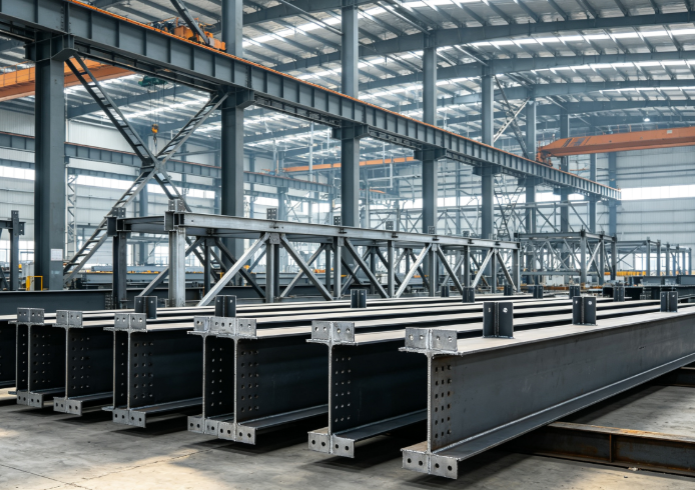
Table of Contents
1. Introduction
2. Core Advantages of Durable & High-precision Steel Structures
3. Key Production Processes Ensuring Precision and Durability
4. Main Product Types for Construction and Industrial Engineering
5. Common Hidden Risks of Low-standard Steel Fabrication
6. Data Comparison: Ordinary Steel Structures VS High-precision Durable Steel Structures
7. Whole-process Quality Assurance System
8. Typical Application Scenarios
9. Custom Engineering Solutions for Global Clients
10. Conclusion
11. Industry FAQ
1. Introduction
Steel structures are widely adopted in construction projects and industrial engineering. Two core indicators decide long-term project value: manufacturing precision and service durability.
Low dimensional accuracy leads to difficult on-site assembly, forced correction and additional structural stress. Poor anti-corrosion treatment and unstable welding quality shorten service life and bring continuous maintenance costs.
We manufacture durable and high-precision steel structures suitable for building construction, industrial workshops, warehouses, new energy facilities and overseas infrastructure projects. Strict tolerance control, standardized welding procedures and complete anti-corrosion systems guarantee stable performance for decades under complex working environments.
This article analyzes how precision manufacturing and durable surface treatment improve engineering reliability, compares different fabrication standards, and offers reference for engineering procurement.
Core Industry Keywords: high-precision steel structures, durable steel building components, industrial steel frame, prefabricated steel construction, steel workshop, structural steel fabrication, anti-corrosion steel structure, steel truss & support
2. Core Advantages of Durable & High-precision Steel Structures
2.1 High Dimensional Precision
CNC cutting, digital drilling and fixture assembly control component tolerances tightly. Bolt holes match accurately, minimizing on-site cutting and modification. Construction schedule can be planned efficiently.
2.2 Reliable Structural Durability
Qualified welding technology eliminates internal defects. Scientific anti-corrosion coating or hot-dip galvanizing slows rust erosion under outdoor, humid or coastal conditions. The building maintains stable mechanical performance for long-term operation.
2.3 Good Load Stability
Uniform force transmission is realized through accurate component geometry. Avoid local stress concentration caused by fabrication deviation, reducing risk of deformation under long-term static and dynamic loads.
2.4 Convenient Modular Construction
High-precision components support modular prefabrication. Factory pre-assembly checks all matching issues before shipment, lowering labor cost and safety risks on construction sites.
3. Key Production Processes Ensuring Precision and Durability
3.1 Raw Material Inspection
Verify steel material certificates. Test thickness, flatness and mechanical property to avoid inferior raw materials affecting structural durability.
3.2 CNC Precision Machining
Numerical control cutting, drilling and sawing ensure consistent component length, section size and hole position. Stable foundation for accurate assembly.
3.3 Standardized Welding & Stress Relief
Automatic submerged arc welding and robotic welding improve weld integrity. Post-weld straightening and stress relief reduce deformation and prevent fatigue cracks.
3.4 Surface Pretreatment
Thorough shot blasting removes rust, scale and oil contaminants, creating proper surface roughness for strong coating adhesion. This is the foundation of long-lasting anti-corrosion performance.
3.5 Multi-layer Anti-corrosion Protection
Match coating systems according to service environment: paint systems for inland projects; hot-dip galvanizing or heavy-duty anti-corrosion coatings for coastal and high-corrosion areas.
3.6 Finished Product Inspection & Pre-assembly
Dimensional inspection, weld non-destructive testing and appearance audit. Large assemblies carry out factory pre-assembly to verify overall compatibility.
4. Main Product Types for Construction and Industrial Engineering
4.1 Main Load-bearing Components
H-beams, box beams, steel columns, trusses, support frames for industrial plants and large-span buildings.
4.2 Secondary Steel Components
Purlin, wall beams, connecting brackets, bracing systems, stair steel structures.
4.3 Prefabricated Building Frame Systems
Complete steel frame packages for workshops, warehouses, office buildings and logistics parks.
4.4 Special Engineering Steel Structures
New energy supporting frames, platform steel structures, pipe racks and heavy-load equipment supports.
5. Common Hidden Risks of Low-standard Steel Fabrication
5.1 Excessive Dimensional Deviation
Causes rough assembly, forced adjustment and residual stress, easily triggering deformation under load.
5.2 Weld Defects such as Porosity and Incomplete Penetration
Weakened bearing capacity; cracks may expand under long-term vibration and load.
5.3 Insufficient Surface Pretreatment & Thin Coating
Coating peeling occurs quickly, leading to rapid rust development and shortening service life.
5.4 Lack of Stress Relief Treatment
Welding deformation continues to develop after installation, worsening assembly gaps over years.
6. Data Comparison: Ordinary Steel Structures VS High-precision Durable Steel Structures
The table below shows actual inspection data collected from construction and industrial engineering projects.
表格
Inspection Item | Ordinary Steel Structures | Durable & High-precision Steel Structures | Engineering Standard Requirement |
Component length tolerance | ±3 ~ ±6 mm | ≤±2 mm | ≤±3 mm |
Bolt hole position deviation | ±1.6 ~ ±2.4 mm | ≤±1.0 mm | ≤±1.5 mm |
Weld non-destructive testing pass rate | 83.1% | 97.9% | Meet design grade |
Anti-corrosion coating thickness fluctuation | ±26% | ±9% | Within design range |
On-site modification rate | 12.3% | 2.6% | Minimize field rework |
Estimated effective service life | 15 ~ 22 years | 25 ~ 40 years | Depends on anti-corrosion system |
The data clearly demonstrates that high-precision and durable steel structures effectively reduce construction obstacles and extend the service cycle of buildings.
7. Whole-process Quality Assurance System
7.1 Raw Material Incoming QC
Material certificate verification and sampling physical testing. Unqualified steel plates and profiles are rejected directly.
7.2 In-process Patrol & First Article Inspection
Each production stage carries out continuous sampling inspection to lock machining and welding parameters.
7.3 Weld Quality Control
Manage welder qualifications; implement random UT/MT non-destructive testing for key load-bearing welds.
7.4 Surface Treatment Monitoring
Check shot blasting cleanliness grade, coating thickness and surface continuity.
7.5 Final Delivery Inspection
Dimension recheck, appearance inspection, marking and packaging. Large-scale frames arrange pre-assembly as required.
8. Typical Application Scenarios
· Industrial production workshops and heavy-duty factory buildings
· Logistics warehouses, cold storage and distribution centers
· Large-span public buildings: exhibition halls, stadiums, shopping malls
· New energy projects: photovoltaic brackets, wind power auxiliary workshops
· Industrial platforms, pipe racks and equipment support structures
· Overseas construction projects and international EPC engineering
9. Custom Engineering Solutions for Global Clients
We can complete structural drawing deepening, component fabrication and supporting enclosure system matching according to international building codes.
Our technical team provides production drawings, calculation documents and full sets of test reports required for overseas project approval. We accept both large bulk engineering orders and small demonstration projects, offering export-standard packaging and loading plans.
10. Conclusion
For construction and industrial engineering, steel structure performance is determined by both precision during manufacturing and long-term anti-corrosion durability.
Low-standard fabrication can reduce initial investment, but brings frequent on-site modification, higher maintenance cost and potential structural safety risks.
Durable and high-precision steel structures balance assembly efficiency, structural safety and long service life. When selecting steel structure suppliers, project owners and contractors should comprehensively evaluate processing accuracy, welding standards and anti-corrosion technology, instead of only comparing unit prices.
11. Industry FAQ
Q1: What is the difference between hot-dip galvanizing and paint anti-corrosion systems? A: Hot-dip galvanizing forms metallurgical bonding layer with steel, better suitable for coastal and highly corrosive environments. Multi-layer paint coating is more cost-effective for inland industrial projects.
Q2: Can high-precision steel components completely avoid on-site adjustment? A: It greatly reduces modification work. Minor fine-tuning may still exist due to foundation construction errors, but forced cutting and correction can be basically eliminated.
Q3: How to judge whether steel structure welding quality meets standard? A: Combine visual appearance inspection and non-destructive testing (ultrasonic or magnetic particle testing) for important load-bearing welds.
Q4: What factors affect the service life of steel structures? A: Raw material quality, welding integrity, dimensional accuracy, surface anti-corrosion system and local environmental corrosion level.
Q5: Is pre-assembly necessary for all steel structure orders? A: Simple small frames do not require mandatory pre-assembly. Complex large-span structures are recommended to complete factory pre-assembly to avoid assembly obstacles on site.
Data Source URLs